リスニング問題
録音を聞いて、空欄をうめましょう。解答は空欄に白い字で書かれています。空欄にカーソルを合わせて範囲を選択すると、解答が見られるようになっています。
ろくおんを きいて、くうらんを うめましょう。かいとうは くうらんに しろい じで かかれて います。くうらんに カーソルを あわせて はんいを せんたくすると、かいとうが みられる ように なって います。
Listen to the recording and fill in the blanks. The answers are written in white text in the blanks. You can see the answers by hovering over the blank and selecting the area.
↓Audio Recording↓
⭐︎⭐︎⭐︎『本文』⭐︎⭐︎⭐︎
『宿題の提出』
宿題の提出
先生:大谷さん、大谷さんの(英作文の宿題)をまだ受け取っていません。もう(提出しました)か?
生徒(大谷):えっ、本当ですか?(先週の金曜日)に、クラスルーム(←refering to an online classroom service)の「課題提出」に(アップロードしました)けど...
先生:ああ、だからですよ。(メールに添付して)、私に直接送ってください。(システムの不具合)で、クラスルームの「課題提出」が先週クラッシュしました。
生徒:えー!そんなこと(知りませんでした)。
先生:先週、(授業中に何度も)言いましたよ。
生徒:じゃあ、(英作文の宿題)は明日の夕方までに(提出します)。
先生:(宿題の提出期限)は先週の金曜日の夕方の5時でした。特別に(宿題の提出期限)を今日の夕方の5時まで(伸ばして)あげます。だからそれまでに(提出して)ください。
生徒:今日はこれから(歯医者に行く)ので無理です。
先生:大谷さんは宿題の英作文はもう(仕上げました)か?
生徒:はい、当然です。先週の(木曜日に仕上げました)。
先生:そのファイルはどこに(保存しました)か?
生徒:iCloudに(保存しました)。
先生:じゃあ、今すぐ、この場所で、大谷さんのiPhoneで、宿題の英作文をメールで私に(添付送信すれば)いいじゃないですか。
生徒:先生、ごめんなさい。ウソを(つきました)。まだ英作文は(終わっていません)。
先生:(そうだと)思いました。
かんじ なし バージョン:
『しゅくだい の ていしゅつ』
せんせい:おおたに さん、おおたに さん の(えいさくぶん の しゅくだい)を まだ うけとって いません。もう(ていしゅつ しました)か?
せいと(おおたに):えっ、ほんとう です か?(せんしゅう の きんようび)に、クラスルーム(←refering to an online classroom service)の「かだい ていしゅつ」に(アップロードしました)けど...
せんせい:ああ、だから です よ。(メール に てんぷ して)、わたし に ちょくせつ おくって ください。(システム の ふぐあい)で、クラスルーム の「かだい ていしゅつ」が せんしゅう クラッシュしました。
せいと:えー!そんな こと(しりませんでした)。
せんせい:せんしゅう、(じゅぎょうちゅう に なんど も)いいました よ。
せいと:じゃあ、(えいさくぶん の しゅくだい)は あした の ゆうがた まで に(ていしゅつ します)。
せんせい:(しゅくだい の ていしゅつきげん)は せんしゅう の きんようび の ゆうがた の 5じ でした。とくべつ に(しゅくだい の ていしゅつきげん)を きょう の ゆうがた の 5じ まで(のばして)あげます。だから それ まで に(ていしゅつして)ください。
せいと:きょう は これから(はいしゃ に いく)ので むり です。
せんせい:おおたに さん は しゅくだい の えいさくぶん は もう(しあげました)か?
せいと:はい、とうぜん です。せんしゅう の(木ようび に しあげました)。
せんせい:その ファイル は どこ に(ほぞんしました)か?
せいと:iCloud に(ほぞんしました)。
せんせい:じゃあ、いま すぐ、この ばしょ で、おおたに さん の iPhone で、しゅくだい の えいさくぶん を メール で わたし に(てんぷそうしんすれば)いい じゃない です か。
せいと:せんせい、ごめんなさい。ウソ を(つきました)。まだ えいさくぶん は(おわって いません)。
せんせい:(そうだと)おもいました。
English Translation:
Submitting Homework
Teacher: Otani-san, I still haven’t received your English composition homework. Have you turned it in yet?
Student (Otani): What? Really? I uploaded it to “Assignment Submission” on Classroom (← referring to an online classroom service) last Friday.
Teacher: Ah, that’s why. Please attach it to an email and send it directly to me. Because of a system glitch, the “Assignment Submission” on Classroom crashed last week.
Student: What? I didn’t know that.
Teacher: I mentioned it many times during class last week.
Student: Okay, then I’ll submit the English composition homework by tomorrow evening.
Teacher: The homework deadline was 5 p.m. last Friday evening. I’ll extend the deadline specially until 5 p.m. today. So please submit it by then.
Student: I can’t. I’m going to the dentist after this.
Teacher: Otani-san, have you already finished your English composition homework?
Student: Yes, of course. I finished it on Thursday last week.
Teacher: Where did you save that file?
Student: I saved it on iCloud.
Teacher: Then you can just attach it and send it to me by email with your iPhone right here, right now, can’t you?
Student: Sensei, I’m sorry. I lied. I haven’t finished the composition yet.
Teacher: I thought so.
⭐︎⭐︎⭐︎『単語/たんご・表現リスト/ひょうげん りすと(Words & Phrases)』⭐︎⭐︎⭐︎
宿題の提出
しゅくだい の ていしゅつ
submission of homework
英作文の宿題
えいさくぶん の しゅくだい
English composition homework
提出しました。
ていしゅつ しました。
(I) submitted it / turned it in.
先週の金曜日
せんしゅう の きんようび
last Friday
「課題提出」にアップロードしました。
「かだい ていしゅつ」に アップロードしました。
I uploaded it to “Assignment Submission.”
メールに添付して、私に直接送ってください。
メール に てんぷ して、わたし に ちょくせつ おくって ください。
Please attach it to an email and send it directly to me.
システムの不具合
システム の ふぐあい
system glitch / system trouble
知りませんでした。
しりませんでした。
I didn’t know that.
授業中に何度も言いました。
じゅぎょうちゅう に なんど も いいました。
I said (it) many times during class.
宿題の提出期限
しゅくだい の ていしゅつきげん
homework deadline / due date
提出します。
ていしゅつ します。
I will submit (it).
提出期限を伸ばす
ていしゅつきげん を のばす
to extend the deadline
歯医者に行く
はいしゃ に いく
to go to the dentist
仕上げました。
しあげました。
(I) finished it. / (I) have completed it.
(木曜日に仕上げました)。
木ようび に しあげました。
I finished it on Thursday.
保存しました。
ほぞんしました。
(I) saved it.
添付送信すればいいじゃないですか。
てんぷそうしんすれば いい じゃない です か。
You could just attach it and send it, couldn’t you? / Why don’t you just attach and send
it?
ウソをつきました。
I lied.
終わっていません。
おわって いません。
(It) is not finished yet. / I haven’t finished (it).
そうだと思いました。
そうだ と おもいました。
I thought so. / I figured as much.
★★★『2. 文法/ぶんぽう のまとめ (Grammar Summary)』★★★
⭐︎⭐︎⭐︎ぶんぽう の ようてん1 / Grammar Point 1⭐︎⭐︎⭐︎
『まだ~ていません』
(not yet ~ / haven’t ~ yet)
Structure
Structure: まだ + verb (te-form) + いません。
🔹例(れい)①(本文)
英作文はまだ終わっていません。
えいさくぶん は まだ おわって いません。
I haven’t finished the composition yet.
🔹例(れい)②
先生はまだそのメールを受け取っていません。
せんせい は まだ その メール を うけとって いません。
The teacher hasn’t received that email yet.
⭐︎⭐︎⭐︎ぶんぽう の ようてん2 / Grammar Point 2⭐︎⭐︎⭐︎
『~ので』
(because / since)
Structure: Clause (plain form) + ので, ~.
🔹例(れい)①(本文)
今日はこれから歯医者に行くので無理です。
きょう は これから はいしゃ に いく ので むり です。
I can’t, because I’m going to the dentist after this.
🔹例(れい)②
システムの不具合があったので、課題提出ができませんでした。
システム の ふぐあい が あった ので、かだい ていしゅつ が できませんでした。
I couldn’t submit the assignment because there was a system glitch.
A quick hello:
Thank you so much for visiting my blog! My name is Mitch, and I’m the author of this site. I’m a professional Japanese and English teacher on the online language platform italki , and on the side I also write ebooks. So, if you don’t mind, let me briefly introduce one of my Japanese textbooks for intermediate learners.
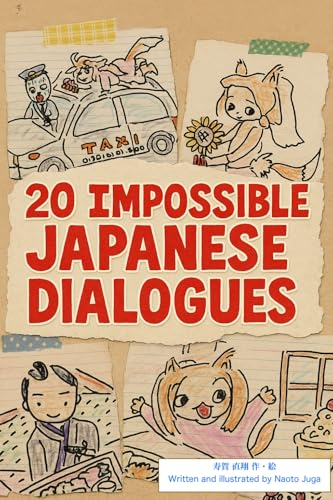
The book I’d like to share with you today is one of my personal favorites: “20 Impossible Japanese Dialogues.” It’s a Japanese textbook that contains 20 slightly crazy, witty conversations. While it covers high-frequency vocabulary, useful expressions, and grammar you’ll see all the time in real life, each dialogue is packed with playful jokes and a fun sense of humor.
The level is around JLPT N3 (intermediate), and the book is designed so that you can naturally build your Japanese through these joke-filled dialogues. Each chapter comes with multiple-choice questions, true/false questions, fill-in-the-blank exercises, a Word & Expression List with English meanings, grammar explanations, and even culture notes in the second half of the book.
On top of that, there’s a download bonus with audio recordings of all the dialogues, read by me. There is an ongoing story from Lesson 1 all the way to the final lesson, so you can enjoy following the storyline while steadily boosting your ability to express yourself in Japanese.
If you’re not a big fan of typical “drill” workbooks or dry practice sheets from the bookstore, but you do want to learn real, natural Japanese while genuinely having fun, this book is especially for you.
If you’d like to enjoy Japanese study + a story + lots of jokes all at the same time, please check out the Kindle version of “20 Impossible Japanese Dialogues” from the link below↓
Amazon in the US↓
Amazon in the UK↓
Amazon in Canada↓
https://www.amazon.ca/dp/B0F949F8M3
Amazon in Australia↓
Amazon in Japan↓